
Two years ago this month the Davis Fire came through. It damaged 87 of our 225 parcels, burned 95% of the association’s land, and left 40 to 50 homes looking out over scorched ground. The full accounting from the November 2024 town hall is here.
Since then St. James’s Village has been accepted into Firewise USA, and Truckee Meadows Fire has rated our community risk moderate. Firewise only works if residents do the work on their own lots, so here is the practical version, written for the way our village is actually laid out.
The three zones, on a one-acre lot
Our minimum lot size is an acre, which means something unusual and useful: on most SJV lots, all three defensible-space zones fall on your own property. You are not depending on a neighbour twelve feet away. What you do genuinely determines whether an ember lands and catches.
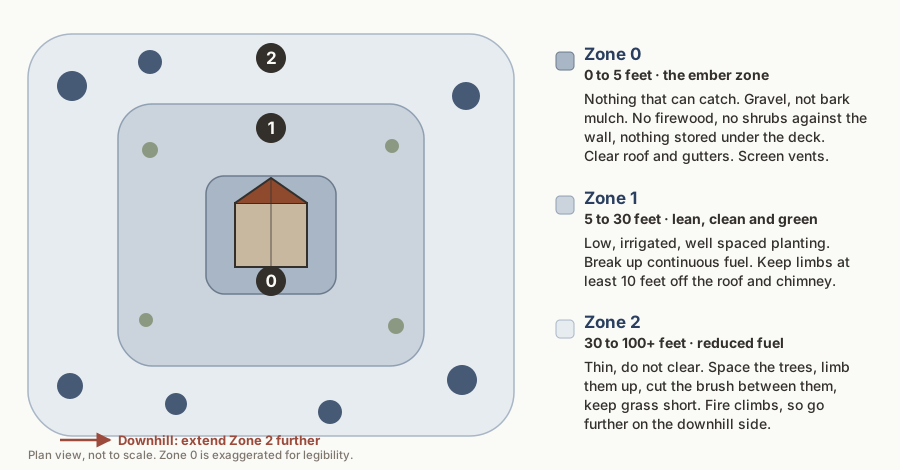
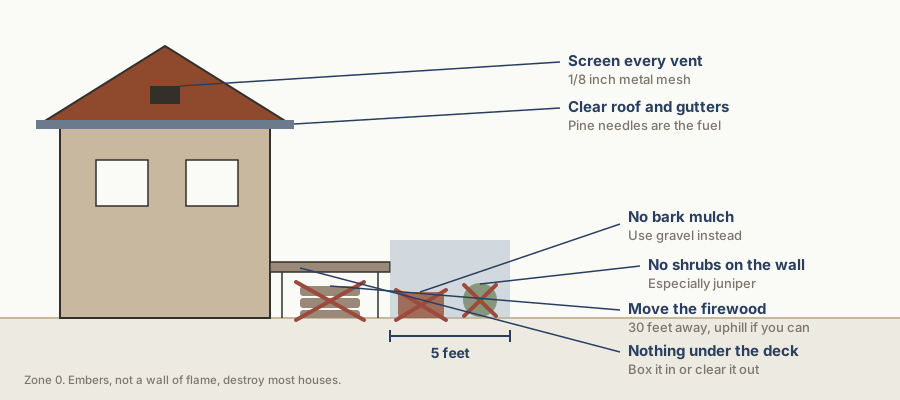
Zone 0, the ember-resistant zone: 0 to 5 feet from the house. This is the highest-value work, and most people skip it. Embers, not walls of flame, destroy most houses. In this band you want nothing that will catch: no bark mulch, no juniper against the foundation, no firewood stacked on the deck, no dead needles in the roof valley or gutters, nothing stored under the deck. Gravel or bare mineral soil instead of mulch. Screen vents with 1/8-inch metal mesh.
Zone 1, lean, clean and green: 5 to 30 feet. Irrigated, low, well-spaced planting. Break up the continuous fuel: separate shrub masses, keep tree limbs at least ten feet from the roof and chimney, remove ladder fuels so a ground fire cannot climb into a canopy.
Zone 2, reduced fuel: 30 to 100+ feet. Thin rather than clear. Space the trees, limb them up, cut back the brush between them, and keep grass short. On our sloped lots the distance should be greater on the downhill side, because fire climbs.
The pine needles our lots produce every autumn are the single most reliable ember-catcher we have. Roof, gutters, deck corners, under the stairs.
Your trees: which ones will live
From the town hall, the field test the foresters gave us:
| Crown remaining | Prognosis |
|---|---|
| Virtually none | Unlikely to survive |
| About 40% | Good chance |
| 60% or more | Excellent chance |
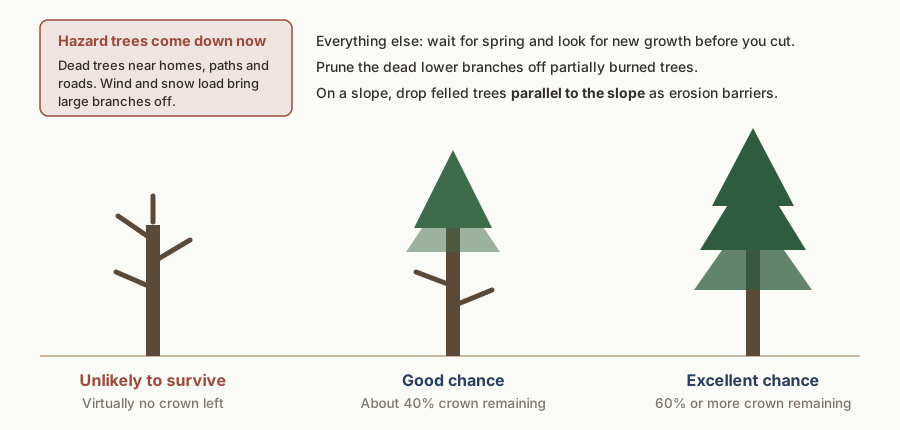
Hazard trees near homes, paths and streets should come down promptly — wind and snow load bring big branches off dead trees. Otherwise, wait and look for new growth in spring before you decide. With shrubs, cut the dead branches off but leave the roots in the ground: most natives resprout at ground level, and those roots are holding your slope together.
On slopes, felled trees dropped parallel to the slope act as erosion barriers rather than firewood.
Doing this without getting a violation notice
This is the bit unique to living here, and it is worth reading twice.
The Design Guidelines regulate landscaping changes, and the September 2026 Schedule of Fines includes categories like “unsightly” and landscaping-related violations. Meanwhile fire agencies and insurers want you cutting, clearing and thinning. Those two things can collide.
Protect yourself:
- Photograph everything before you start. Wide shots and close-ups, dated.
- Ask the ALC in writing whether your defensible-space work needs review, and describe it specifically. A written yes or no protects you either way. Keep the reply.
- Keep the paperwork from any fire agency inspection or insurer requirement that prompted the work.
- If you are cited anyway, that documentation is exactly what a hearing is for. See how fines work.
The 2024 town hall said ALC guideline changes were coming to bring the design rules in line with Firewise principles. Whether that ever happened is a fair question for owner comment, and it is on our list for the September 13 owner call.
Alerts: five minutes tonight
In the Davis Fire the useful information did not come from the association.
- Washoe County Regional Alerts — the official emergency notification system, reaching cell (text and voice), landline, email and social. Register your address and every phone in the house. This is the one that matters, and it is opt-in.
- Watch Duty — free app, staffed by people monitoring radio traffic. Fastest reliable early warning most residents will get.
- Perimeter — live fire perimeter and evacuation zone maps.
- On X: Truckee Meadows Fire & Rescue, Washoe County Sheriff, NDOT Reno. During the Davis Fire these carried road closures before anywhere else.
- The SJV WhatsApp group. Neighbours reporting what they can see is genuinely useful, but treat it as rumour until an agency confirms it. Ask to join.
Evacuation: our gates are the plan
Everything about an evacuation here runs through two gates and one road out to Mt. Rose Highway. That makes gate operations a life-safety issue, not just an inconvenience.
The 2024 town hall was blunt that coordination with the Sheriff’s Office and fire departments went badly, that sightseers and potential looters got in during the shutdown, and that a resident watch mobilised in response. The committee’s proposed fix was a named agency liaison, a written emergency response plan, and a community emergency response team with street captains and a communications plan.
Ask whether that exists in writing. Specifically: who has the authority to open the gates for an evacuation, what happens if power and internet are out, when the entrances get locked down, and whether residents can return temporarily. Those were the committee’s own open questions to the agencies in 2024.
In the meantime, for your own household: know two ways out, keep vehicles backed in and fuelled above half in fire season, keep a go-bag with medications, documents and pet supplies, and agree a meeting point outside the village. Do not wait for an official order if you can see it coming; our roads do not accommodate everyone leaving at once.
Insurance and property taxes
Insurance. Carriers have been pulling back in Nevada’s wildland-urban interface, and the 2024 town hall noted one major carrier had already cancelled a number of policies here.
The question owners usually ask is whether Firewise cuts the premium. That is probably the wrong question. The evidence from our own community is that it affects whether you get offered cover at all.
The owner who led the Firewise effort here after the fire reports:
Several residents have been asked to send our Firewise certificate to their insurers. When we were shopping for fire insurance after the fire, I was speaking with a USAA underwriter and they would not insure us until I mentioned we were Firewise recognised. Then they changed their tone completely and offered to insure us. Their premium was higher than State Farm, so we eventually went with State Farm, but insurers are starting to pay attention to Firewise.
So: it may not lower what you pay, and nobody should promise that it will. It has already changed a “no” into a “yes” for at least one household here, and several insurers have asked residents for the certificate by name.
Practical steps:
- Get a copy of the community’s Firewise certificate and keep it with your policy documents. Ask the Fire & Safety Committee or the management company.
- Send it to your insurer or agent unprompted, especially at renewal or if you are shopping.
- Photograph your defensible space work and send that too.
- Ask in writing what mitigation earns a discount or keeps you insurable, and keep the answer. A written record is worth having if cover is ever declined or non-renewed.
Property taxes. After the fire the HOA appealed to the Washoe County Assessor to reduce appraised values community-wide, and the Assessor was willing to adjust land values down and allow a reduction for damaged views. If a home is unlivable for 90 days or more, it qualifies for a major reduction. If you believe your assessment does not reflect fire damage or lost views, you can appeal it yourself through the Assessor’s office.
Where to learn more
- Living With Fire — University of Nevada Reno Extension. The single best resource for this specific landscape, free, and the one our own committee pointed residents to. Start with their defensible space and home-hardening guides.
- Firewise USA — the national programme we belong to.
- Nevada Division of Forestry — our state partner, and the agency that flew the aerial seeding after the fire.
- Truckee Meadows Fire & Rescue — our fire district; they performed our community risk assessment.
- sjvhoa.org Firewise page — the association’s own material.
The one-hour version
If you do nothing else this month: clear the first five feet around your house, clean your roof and gutters, and register for Washoe County Regional Alerts. That is most of the benefit, and it costs a Saturday morning.
Written by owner volunteers from the SJV Fire & Safety Committee’s November 2024 presentation and public agency guidance. Not professional advice. For your own property, talk to the fire district or a qualified forester.